- Home
- Getting Started
- Studio Classes
- Choosing a Studio
How to Choose a Pole Dancing Studio That Fits You
By Susan Peach
The right pole dancing studio for you is the one that matches your goals and your learning style, with an environment that feels physically and emotionally safe. The best studio is not always the closest or trendiest one. It’s the one that gives you the confidence to start, helps you feel safe while you learn, and provides an environment that makes you want to keep coming back.
Back when Your Pole Pal first started pole dancing, pole dance studios weren't yet a thing. There were literally 3 instructional DVDs available—none of them very good by today's standards—and one manufacturer of home dance poles.
If you were lucky enough to have classes nearby, they'd have been private lessons in the home of a current or former exotic dancer. Not that there's anything wrong with that, it was just the only way to learn back then, other than teaching yourself. Which is what Your Pole Pal did out of necessity.
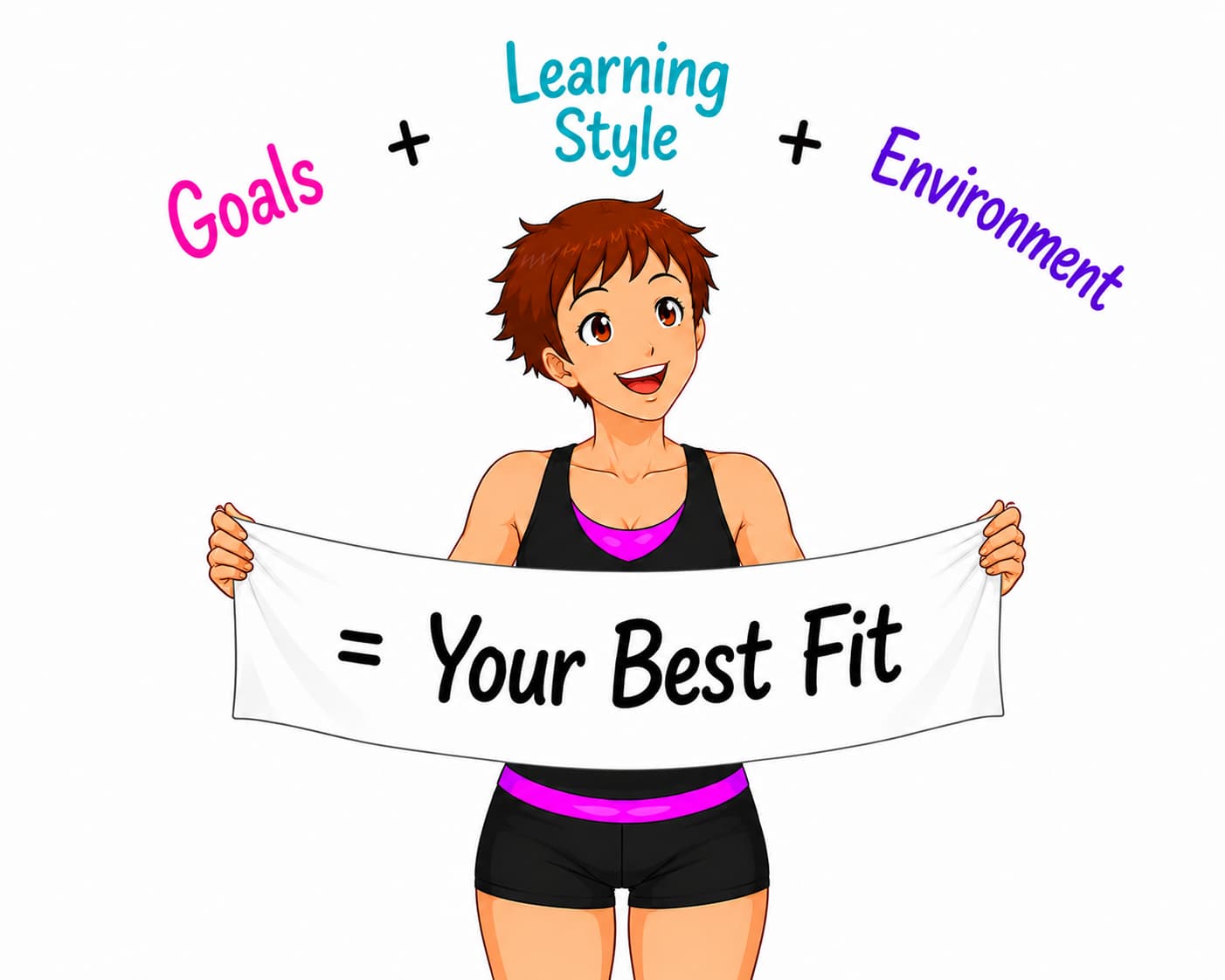
Goals, learning style, and environment just didn't factor in. It was strictly a "make it up as you go" affair. Fortunately, things are very different now. You might even have a number of options when you're looking for a pole dance studio. And that's where the difficulty comes. How do you choose?
The Big Question: Will I Feel Supported Learning Here?
Not every studio is a good fit for everyone, and that's not a bad thing. We all have different goals and learning styles, and we all need different things in order to feel comfortable and confident about the learning process.
On the flip side, every studio is different as well, and it would be unreasonable to expect that every studio can meet the needs of every student. A studio can be reputable, inclusive and safe, and still not be the right fit for you.
Let's start by giving some thought to your personal priorities, because a good match between those and what a studio has to offer is what will help you feel safe, confident and supported in your pole journey.
Your Three Point Evaluation Plan
1. Goals
Your decision about which studio to choose starts with you. In other words, focus on your goals, not the studio's marketing.
Before you even visit a studio, you might find it helpful to define what's most important to you. The question to ask yourself here is simple: What do you want to get out of pole?
There's no wrong answer, and you might have more than one goal. But knowing what you want out of pole will help you find a studio that can deliver, and avoid those that aren't a good fit. Here are some possible goals to get you thinking.
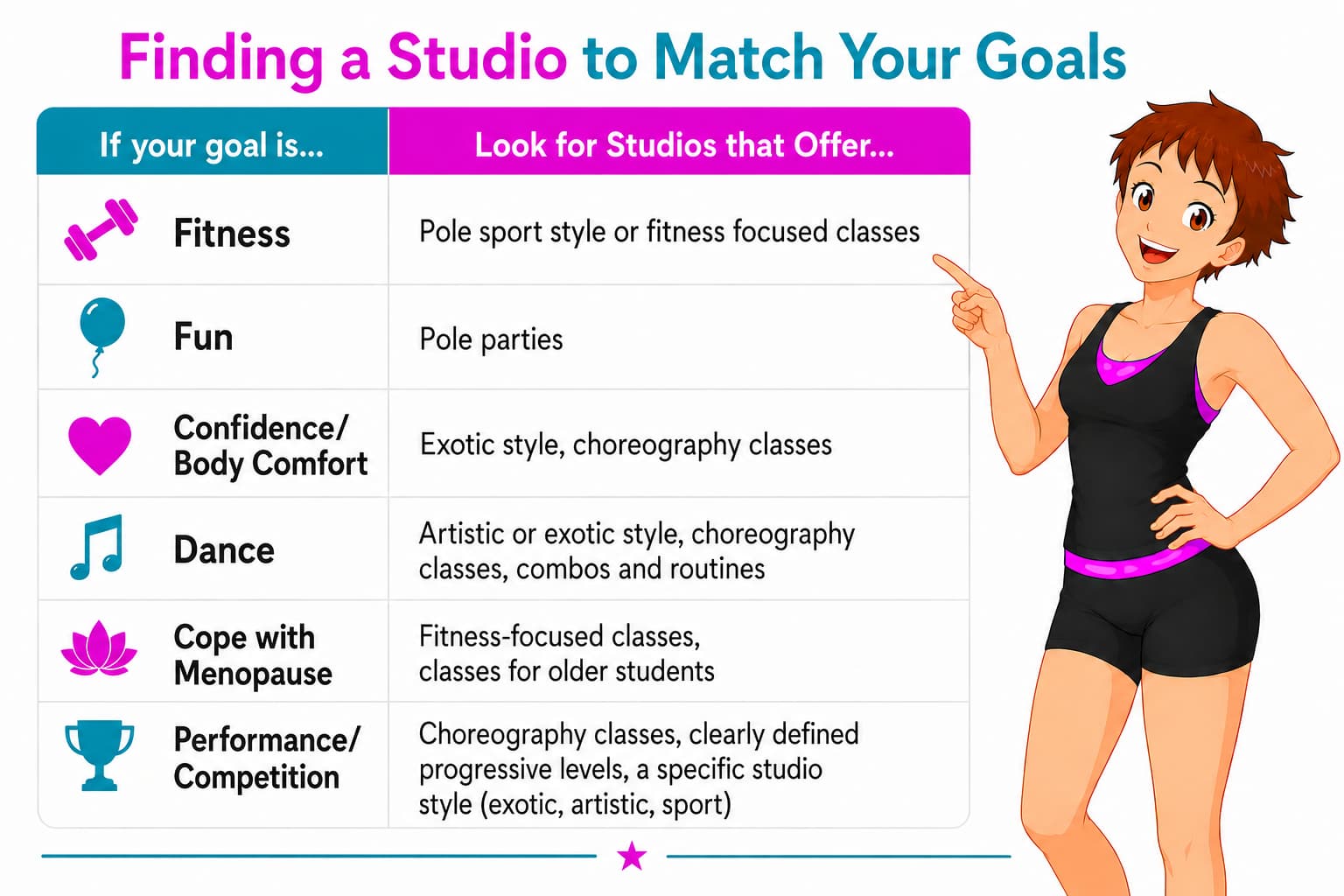
Fitness
Perhaps you're on a mission to find a fitness activity you'll enjoy enough to finally stick with it. Or maybe you're looking to add more variety to your current exercise routine so you don't get bored.
You'll want to look for a studio with an emphasis on fitness, or that offers at least some classes that are specifically focused on strength, cardio and/or flexibility. These might have names like Pole Workout, Cardio Pole, or Strong & Sexy.
Confidence & Body Comfort
Do you want to get (back) in touch with your sexy side and start to feel more comfortable in your own skin? Maybe you've raised a family and/or built a career only to discover that you've left yourself behind. A little confidence boost might be just the ticket.
In this case, you may want to choose a studio that focuses on exotic style pole, or one that offers classes or workshops that teach a specific choreography. These types of classes often have a strong self-confidence component.

Did you know there's more than just one style of pole dancing? Depending on your goals, you might be interested in Pole Sport, Exotic Style, or Artistic Pole. Learn about these different pole styles so you can choose your best fit.
Something New
Your goal might be to break out of your comfort zone. Trying something you've never done before is a great way to challenge yourself and grow as a person. Your Pole Pal is all for that!
If you've never tried pole dancing before, most studios will likely fit the bill here. So in this case, your best studio match may depend more on any secondary goals you identify.
Dance
It could be that you just love dancing. Any kind of dancing. But you haven't yet crossed pole dancing off your bucket list and you're curious to explore this new form of movement.
Look for a studio that teaches either exotic style or artistic pole, as both of these are very much dance-based. Another good fit for you could be a studio that offers choreography style classes, or that teaches pole moves by building combos and short routines.
Fun
If you're someone who just loves to enjoy life and have a good time, the fun factor might be what draws you to pole.
Although different studios tend to lean towards one particular style of pole, most are pretty fun places to be in general. So again, your choice of studio is probably more dependent on any secondary goals you might have. But do consider hosting a pole dancing party — that could be the perfect way for you to start your pole journey, and many studios offer this option.
Coping with Menopause & Bone Density
If you're approaching menopause or are post-menopausal, you might be looking to pole as a way to manage the weight gain that so often comes with this phase, as well as maintain your bone density.
Lifting your own body weight up a pole definitely counts as strength training, and it's a well-known fact that weight-bearing exercise is one of the most effective ways to maintain and even improve your bone density as you age. Plus, preserving or increasing the amount of muscle you have on your body helps you maintain a healthy body weight.
If this is one of your goals, you'll want to choose a studio with a fitness-focused approach, and you may also want to inquire about whether classes are offered for your specific age group, whether that's 40+, 50+ or better.
Social Connection
Are you looking to increase your social connections? Maybe you're already a super social person and are looking to make new friends in a new circle. Either way, the sense of community in a pole studio might be what draws you to this activity.
Most studios offer a very supportive environment, with many students sharing similar goals and challenges. The bonding that takes place in class often has a spillover effect, creating opportunities for new friendships. Once again, any secondary goals you have may be the determining factor in your choice of studio.
Performance/Competition
Training for performance or competition might be one of your goals if you've previously participated in a related sport like gymnastics or dance. If you already know that you love performing or competing, taking up pole can offer new challenges and opportunities.
You'll want to search out a studio that can help you develop the necessary skills to feel confident performing. Look for classes that offer a clear progression of levels, so you'll know you'll be able to build the skills you'll need. Aside from that, choose your studio based on the style of pole you'd like to compete in: exotic and pole sport offer competition opportunities specific to these styles, but there are also lots of competitions that are open to all styles of pole.
Keep in mind that there are no right or wrong answers as you consider your goals, just like there are no right or wrong studios.
The important thing to remember is that you're looking for a good match. If your goal is to have a little fun and find a fitness routine you enjoy, but the studio you're considering only teaches exotic style pole, you might find that the mismatch turns you off pole dancing entirely.
That's why identifying your goals first is important. When you know what you want out of pole classes, you can measure any studio against whether or not you feel it can deliver what you're looking for.
2. Learning Style
Ideally, your learning style and the teaching style used by the studio's instructors will complement each other.
For example, if you thrive on encouragement and positive feedback, you'll probably feel comfortable with an instructor who applauds your efforts and is careful to let you know what you're doing well before offering gentle corrections. But if the studio's style is to constantly push you to do better, and to foster competition among students, this mismatch can impact not only how much you learn, but also how much you enjoy the process.
As you prepare to make your first visit to a studio, perhaps for a trial class, a pole party, or an introductory lesson, keep in mind how you learn best. Then when you're actually in the session you'll be more aware if anything feels off about the instruction.
There are lots of ways to define learning style, but there's no need to get super technical about this. We're not talking here about auditory vs visual vs kinesthetic learners. All you need to do is identify the conditions under which learning is most enjoyable for you. For example...
- Do you prefer to learn on your own, or alongside someone else for mutual support and encouragement?
→ Consider the studio's policy on class size. Are poles shared, or is it one student per pole? Does the studio offer private as well as group classes? - Do you need to be given an exact, step-by-step breakdown of how to do something, or are you someone who learns best by figuring out the details on your own through trial and error?
→ Pay attention to how much detail and correction instructors provide. If you learn by figuring it out yourself, you might feel frustrated by an instructor who corrects too early or too often.
These are just two examples, and you may not even be aware of what your preferred learning style is yet. But if you give it some thought before you take your first class or trial lesson, you'll be better prepared to gauge whether the studio's teaching style meshes (or not) with how you learn best.
Feeling a bit unsure about taking your first class?
Learn what to expect, what to wear, and get tips on general studio etiquette in this guide to your first pole class.
3. Environment
Your first visit to a studio is the ideal time to evaluate the environment. This includes both the physical and the emotional components. Let's take a look at these individually, so you'll better understand the factors to look for when deciding what's important to you.
Physical Environment
The physical environment of a pole studio can impact your experience more than you might realize. This assessment is all about what you'd like to see in a studio's physical environment that would help you feel confident, safe and supported as you learn.
Perhaps it's a comfortable lounge area where you can socialize and make new friends with some of the people in your class.
Or it could be a bright, well-lit studio space, as opposed to a studio with dimmed lighting.
Maybe it's seeing a safety mat under every pole when you tour the studio for the first time.
There are likely other amenities you'll want to consider as well. For example, is it important to you that the studio have showers, or on-site child care? You may also want to take into account parking, public transportation connections, and ease of access to the studio.
Emotional Environment
Equally important, if not more so, is a studio's emotional environment, also known as the culture or "vibe." There are lots of factors that contribute to shaping a studio's culture, but what it all boils down to is whether the studio feels like an emotionally safe place for you.
Of critical importance is whether you feel welcome in the space. Most studios promote themselves as inclusive and welcoming to all, but if you are a plus size or gender-diverse person, much older than your average pole dancer, are living with a disability, or have any other kind of "difference," you will likely be very sensitive to whether or not the studio's stated inclusiveness feels real to you. Trust your gut on this, because only you know what inclusion truly feels like.
A studio's emotional environment is also affected by the quality of instruction. For example, are the instructors student-focused and safety-oriented in class, or does it feel more like the classes are an opportunity for the teachers to show off? Instructor quality is an important factor in creating an emotionally safe environment, so you may want to check out this guide to help you understand what makes a good pole instructor before you head out to your first class.
Having the information you need to make an informed decision also falls under this category. Things like pricing, membership options, class schedules and structure, and studio policies around safety, clothing, and cancellation are important things to know.
If this information is hard to find, or not readily provided, it can create a sense that the studio has something to hide. On the other hand, front desk staff who clearly explain sign up procedures, membership options, and cancellation policies might give you the confidence to go ahead and sign up for a trial class.
To help you with the exercise of evaluating a studio's emotional environment, you can also consider what helps you feel comfortable in new situations, or when you might be feeling nervous about something you've never done before, like pole dancing.
Perhaps it's something as simple as a warm smile and being greeted by name when you walk in the room, so you feel like you're not just another person in a crowd.
Or is it knowing that the instructors all have recognized certifications and first aid training that helps you relax and trust that you'll be safe in class?
Emotional safety isn't just a vague warm and fuzzy feeling; it directly affects whether someone new to the studio gains confidence from the learning experience, is able to ask the questions that are important to them, and feels welcome enough to return.
Whatever it is that puts you at ease when you walk into a pole studio is what you'll be looking for as you evaluate emotional safety. A studio that checks your comfort boxes is worth a second look.
Green Flags: These Matter More Than Marketing
A studio's website or social media is marketing. When you visit a studio in person you can start to separate actual trust signals from surface-level branding. Here's a summary of what to look for:
- Respectful, welcoming vibe
- Diversity in staff and/or visible inclusivity
- Safety — crash mats; spotting; professional equipment
- Certified or properly trained instructors
- Structured classes with clear beginner entry points
- Appropriate ratio of students to instructors and poles
- Supportive & encouraging instructors
- Clear communication on pricing & policies
- Clean & orderly spaces
Red Flags That Should Make You Pause
While no studio is perfect all the time, you'd be wise to proceed with caution if you encounter any of these issues on your first visit to a studio. Your Pole Pal doesn't want you wasting your money or landing somewhere unsafe or discouraging. Watch out for:
- Vague or unclear pricing
- Pressure to buy or sign up immediately
- Unsafe setup — poles spaced too closely; low-quality equipment
- Large class sizes without additional instructors to assist
- No clear learning path for beginners
- Instructors more focused on performance than on students
- Cliquey or intimidating class culture
- Inconsistent or frequently changing studio hours
It's so important to be able to spot safety red flags in particular. Even if you're a beginner, you can learn to easily assess pole studio safety. Discover exactly what to look for, then use the downloadable safety checklist on that page to help you evaluate studio safety on your very first visit.
So What's YOUR Best Studio?
The truth is that the best studio is not necessarily the most famous or the prettiest, and the best way for your friend to learn may not be the best way for you. It's important to make a choice that's based on YOUR needs, not someone else's.
To help you quickly evaluate any studio you're considering, here are a few questions you can ask yourself after your first visit. They're based on the recommendations on this page, to help you understand whether or not a studio is a fit for you.
- Does the studio offer classes that seem like a good fit for my goals?
- Did I feel welcome in the studio?
- Do I feel like I could "belong" here?
- Did I have fun in class?
- Did I feel safe in class?
- Did I feel more relaxed/at ease leaving the class than when I arrived?
- Would I feel okay coming back next week?
- Did I feel comfortable asking basic questions of the staff and instructor?
- Did the pricing, policies and expectations feel clear?
If you can answer "yes" to most of these questions, that's a sign that this studio could be a good fit for you.
What if It's Not a Good Fit?
It's equally important to point out here that just because a studio isn't a good fit for you, doesn't necessarily mean it's not a good studio.
Someone else might be entirely comfortable with taking classes from a self-taught instructor, but you might need to see training certificates displayed on the studio walls.
You might love being able to register for classes online but your technology-challenged friend might find that way too frustrating.
Heck, if the studio's color scheme is focused on pink but you can't stand that color, that might be what sways your decision. It's entirely your call.
There's no "wrong" studio, but there are likely studios that are a much better fit for you than others. So if a studio doesn't feel like a match for whatever reason, it's perfectly fine to acknowledge that and move on. You deserve to learn in an environment that feels like a good fit for YOU.
If you need help searching out more studios, Your Pole Pal's worldwide pole dancing directory can help you find a pole studio near you.
Or you might want more general info about pole studios and classes first, including different class styles and formats, what you can learn from a studio's website, and what to look for on your first visit.
If the only studio in your area doesn't feel like a fit for you, there's always the option of learning to pole dance in your home. This home vs studio guide spells out the pros and cons of each option, and helps you decide what your best option is.
FAQ
Is it normal to try more than one studio before choosing?
Is it normal to try more than one studio before choosing?
Yes. Not only is it normal to do this, it's strongly recommended to try several studios if you live in an area where this is an option. Every studio is different in the style of pole taught, as well as its equipment, facilities, and instructors. Pricing and policies can differ widely as well. You deserve to find the best match for your needs in whatever pole studio you ultimately choose, and it's well worth your time to try out several studios before making a final decision.
Is it OK to switch studios if the first one doesn't feel right?
Is it OK to switch studios if the first one doesn't feel right?
Of course! Remember, you are evaluating studios to see if they're a good fit for you. YOU are the customer and if you don't feel comfortable, or the instructors don't teach in a way that works for you, or if the studio doesn't meet your safety expectations, it's 100% fine to switch.
Sometimes a studio might want to know why you're switching because it helps them know if there's something they can improve, but you're not obligated to explain your decision. If you do feel you need to offer an explanation, you can simply say that you're trying out different studios before you make up your mind, and you've decided to go with a different studio that better fits your needs.
Do I have to take a trial class before I start regular lessons?
Do I have to take a trial class before I start regular lessons?
Probably not. Trial or sampler classes are normally offered so that people can try out the studio before committing to a membership or a lesson set. But if you've already decided you want to take classes at that studio, taking a trial class isn't usually a prerequisite. There are some studios that do require you to take an introductory or foundation class before signing up for any of their other pole classes, but this is usually not the same as a trial class that's meant for you to see if you like the studio or not.
I'm on a budget, is it OK to choose the cheapest studio?
I'm on a budget, is it OK to choose the cheapest studio?
Ideally, cost would come near the bottom of your priority list when choosing a pole studio. But realistically, affordability is an important factor for many people. If you must choose based on cost, just make sure that most of the other pieces that are important to you are also in place. A studio might have low prices and also have highly qualified instructors, good quality equipment and a vibe that's a good fit for you. But if a studio's pricing is low because they've installed cheap poles and scrimped on safety or instructor training, you may not want to take those risks.
What if I like the studio but feel intimidated?
What if I like the studio but feel intimidated?
If a studio seems like a good fit except for the intimidation factor, it may still be worth considering. The important thing to assess in this case is whether the staff, instructors, or other students acted in ways that left you feeling excluded or inadequate, or whether your feelings of intimidation came more from your own nervousness.
It's normal for most people to feel nervous when they first visit a pole studio and take their first class, and sometimes this can feel like intimidation just because you're a beginner. You may want to try a few more classes to give the studio a fair chance. If it's just nerves, you'll likely be feeling much more comfortable after a couple more classes. But if the feelings of intimidation persist, you may want to explore other studio options in your area.
Should I choose a studio that has static or spinning poles?
Should I choose a studio that has static or spinning poles?
Ideally, choose a studio that offers both. In fact, most studios these days have at least some poles that can be used in both static and spin mode. While you'll likely want to start learning on a static pole, the option to later train on spinning poles will open up different skills, styles and learning opportunities as you progress.
Was this page helpful? Make YourPolePal.com your preferred source of pole dance info on Google, so it'll be easier to find more useful pole guides like this one.

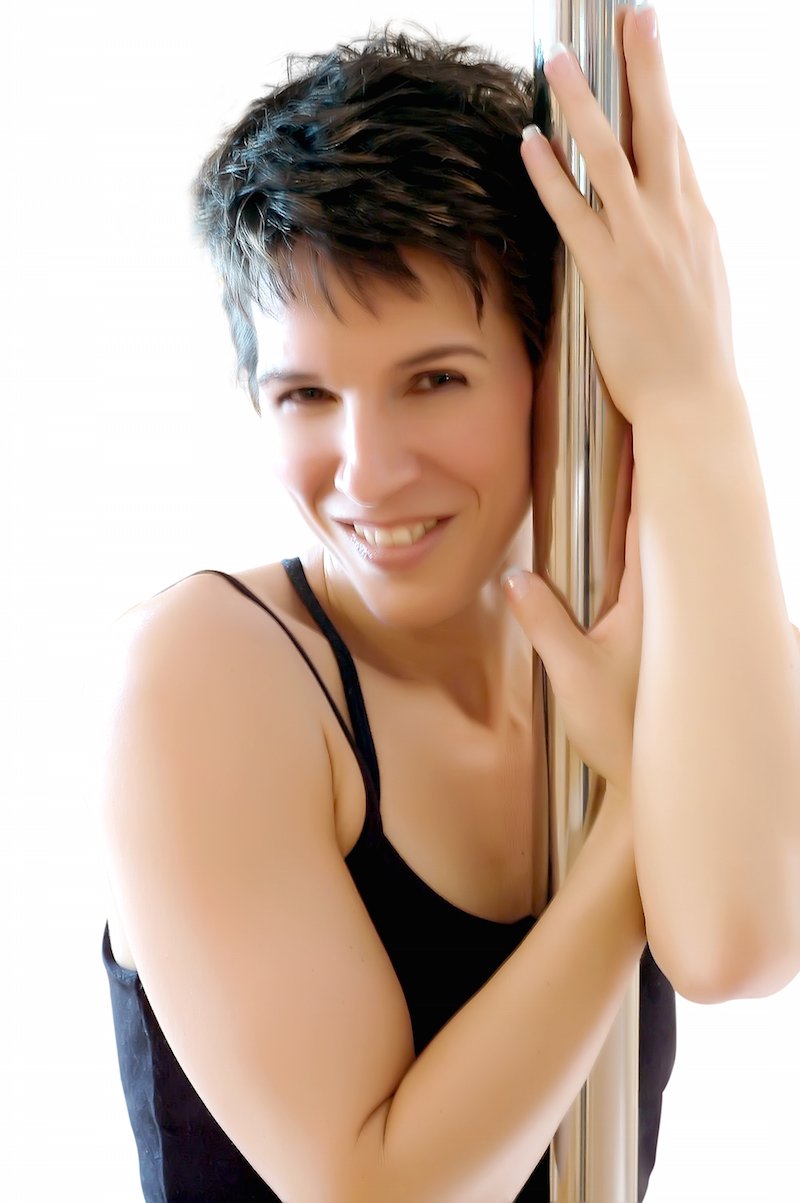
Susan Peach was an early pioneer in pole fitness and is now the voice behind Your Pole Pal, a long-running resource for the pole community. With more than 30 years of experience teaching pole, dance, and fitness, she helps newcomers navigate the world of pole with confidence.

What's New?


-
How Old Do You Have to Be to Take Pole Dance Classes?
Sep 06, 26 04:12 PM
 Get clear on minimum age limits for pole dance classes, and why waivers, studio policies, and parental consent all matter.
 -
How Hard is Pole Dancing? A Beginner's Reality Check
Aug 30, 26 05:42 PM
 Pole dancing is hard, but beginners can start at any fitness level. See what to expect, why technique matters, and how progress gets easier with practice.
 -
Pole Dancing for Beginners - What to Expect and FAQs
Aug 23, 26 08:35 PM
 Learn what to expect as you begin your pole dancing adventure, including answers to the most common questions from new pole dancers.
 -
London Pole Studios & More | Pole Dancing in England
Aug 21, 26 06:12 PM
Discover top pole studios in London as well as pole dancing classes throughout England. Find local studios near you to start your pole dancing adventure today. -
Getting Started with Pole Dancing: A Beginner's Guide
Aug 02, 26 11:02 PM
 New to pole dancing? Learn about home vs studio options, pole parties, safety basics and more so you can plan your pole dancing journey right, from the start.
Your Pole Pal loves to have fun, but she also has to earn a living, right? That's why you'll see ads on this site. She may also earn commissions on some of the products you'll see here, but there's never any cost to you since the advertisers pay for these.
The income generated through these means helps ensure Your Pole Pal can devote the time to providing you with all the free information & resources you'll find on this website.
Want to learn more? Your Pole Pal invites to you read her full advertising disclosure. You know...in case you haven't read enough legalese lately. 😉