- Home
- Getting Started
- Studio Classes
- Good Pole Instructor
What Makes a Good Pole Instructor?
By Susan Peach
A good pole instructor is much more than an experienced pole dancer. Skilled teaching combines technical knowledge of pole dancing with good communication skills, safety awareness, and the ability to provide the right amount of challenge at the right time. The best instructors adapt to different learning styles, and strive to create an environment where students can progress safely and confidently according to their individual needs.

Great Pole Instructors...
- foster physical & emotional safety
- support & encourage
- communicate clearly
- provide individual attention
- modify moves as needed
- correct respectfully
- challenge appropriately
- adapt to student needs
- respect boundaries
- celebrate progress
Great pole instructors...
- foster physical & emotional safety
- support & encourage
- communicate clearly
- provide individual attention
- modify moves as needed
- correct respectfully
- challenge appropriately
- adapt to student needs
- respect boundaries
- celebrate progress
Great Pole Dancers Aren't Always Great Instructors
A lot of pole students assume that the best pole dancer makes the best teacher. While it's true that many excellent pole dancers also excel at teaching, the two skills sets are very different. In other words, being a good pole dancer doesn't automatically translate into being a good teacher.
Technical Skills vs Teaching Skills
It's pretty easy to see whether or not a pole instructor has good technical skill — meaning they can pole dance well — but assessing teaching skills can be more difficult, unless you know what to look for.
Instructor certification can be a positive sign, but it doesn't necessarily tell the whole story. That's because certification courses typically cover how to teach pole moves safely, but they vary a lot in how much time they devote to developing actual teaching skills.
This guide can help you recognize what good teaching skills look like in practice, whether you're a student looking for tips on how to recognize a good instructor, or a pole instructor wanting to improve your teaching skills.
Your Pole Pal once signed up for a class in a new-to-her style of dance.
From the start of the first class it was very evident that the instructor was struggling. The class was held in a large gymnasium and there were far too many students for one instructor to manage well. Many of the students couldn't even see the teacher, and most weren't going to get any individual attention.
The instructor also had a small voice and no microphone, so it was very difficult to hear what she was saying. As a result, the students muddled through, trying to help each other as best they could. Of course, that meant there was lots of talking, so the instructor spent much of the class unsuccessfully trying to get the attention of the students by waving her arms and yelling "HELLLLOOOOO!"
The instructor was a fantastic dancer and regularly competed at a high level, but her teaching skills were obviously lacking. As a result, many students either transferred to a different class or simply didn't return.
Safety Is Just The Beginning
A good pole instructor works hard to make sure their students stay safe in class. But teaching safe pole classes is about more than just preventing injuries.
Everything a good pole instructor says and does is grounded in safety, from knowing how to modify moves, to cultivating an environment in which students feel emotionally safe asking "dumb" questions.
Physical Safety
Obvious signs of a physically safe learning environment — like crash mats and properly spaced poles — are easy to identify. The signs of safe teaching skills can be more subtle, but they're equally important in ensuring students' physical safety.
Explanations
A good instructor will explain safety expectations before, during, and after teaching a move. This means both saying/showing what needs to happen, and explaining why it's important.
Rather than simply demonstrating how a move is done safely, and then asking students to try the move, great instruction looks like this:
- the instructor explains the important safety points first, including the "why"
"For this next spin, the placement of your outside hand is going to be very important, because if it's not in the correct place your body is going to crash into the pole once you get airborne."
- the instructor explains and demonstrates the move, showing the importance of the safety information just given — in this case, hand placement
"You can see that if I place my hand too high, instead of at hip level, I won't be able to control how far my body is from the pole while I'm spinning."
- after explaining and demonstrating the move being taught, the instructor reminds the students of the safety protocol just before they start practicing — even better, the instructor can ask the students to name it before they begin
"Now we're all going to try that spin together. Just before we do, please show me where you're going to place your outside hand as your feet leave the floor."
Focused Attention
It's not enough for instructors to simply give safety pointers while teaching. They also need to follow through by paying attention while students are practicing, so they can be alert to incorrect technique or unsafe positioning that might result in injury.
Getting distracted — by an alert on their phone or something happening outside — risks undoing the benefit of the safety information they just provided.
Modifications
Being able to provide adaptations and modifications for individual students who may be dealing with prior injuries or physical limitations is an important part of ensuring students' physical safety in a pole class.
A good instructor will be able to handle this seamlessly, drawing on their knowledge of anatomy and injury prevention to suggest one or more safe alternatives.
An instructor who struggles to provide an option, or who advises a student to "just try it anyway," may lack knowledge, empathy, or both.
Progression
Safe instruction involves teaching skills in a progressive way. This means ensuring students are competent at basic skills and have developed sufficient strength and flexibility to be able to safely do more difficult moves.
A good instructor won't be pressured into teaching students moves that are too far above their current abilities. Instead, the instructor should explain to an overly eager student why it's not safe to attempt these moves just yet, then refocus on helping the student master the prerequisite moves.
Emotional Safety
Emotional safety often runs in the background, taking a back seat to the more obvious signs of a learning environment that is physically safe. But that doesn't mean it's not important.
Students who feel supported and encouraged enjoy the learning experience more, tend to master skills faster, and are more likely to continue their pole training. Even though it's not something that can be seen and touched — like a crash mat — emotional safety has a huge impact on a student's in-class experience, and is something good pole teachers strive to create through their words and actions.
Questions Are Encouraged
In an emotionally safe learning environment, questions are welcomed and encouraged, and no student is ever made to feel that they've just asked a stupid question.

A curt "I'll answer that later," might leave a student feeling like their question isn't important. But if it was important enough for a student to ask, the question deserves an answer.
An instructor who prioritizes emotional safety might instead say, "That's a really important question, and I'd like to address it in a few minutes because it's related to a new grip we're going to learn today."
Mistakes Are Normalized
Have you ever mastered a skill without making mistakes along the way? Your Pole Pal thinks not. 😉
The fact is that mistakes are a valuable part of the learning process. They act like a process of elimination, teaching us all the things that are NOT what we're trying to learn, on the way to mastery.
Pole teachers who understand this don't demand perfection of their students. Instead, they accept mistakes as normal and treat them as what they are: a natural part of the learning process.
Back when Your Pole Pal was teaching, any version of "not it" was actually celebrated in class. That's because students were told at the outset that mastering a skill required many, many repetitions, most of which would be imperfect. A "mistake" was just considered one of the many required repetitions on the way to mastery. Over time, students learned to accept and even welcome imperfect attempts because they understood these were a required part of the journey towards achieving their goal.
Students Aren't Made to Feel Behind
It's often the case that some students are repeating a class, usually because they aren't yet fully competent at all the skills required to move to the next level. But sometimes students taking the class for the first time can feel like they're behind, because the students who are repeating the class already have some skills.
A good instructor teaches the curriculum for that class level, making it clear that those students who are repeating the class are there to review previously learned material. This reassures new students that they are in the right level and are not behind, even if some students might seem more advanced.
Comfort Zones Are Stretched
Good pole instructors push their students at the appropriate time and in ways that challenge them but are do-able. A teacher has a more objective view of what a student is capable of, and when they provide reassurance that the student has the skills to be able to step safely outside their current comfort zone, that's when progress happens and confidence soars.
Boundaries Are Respected
Cultivating an environment where students can say no is equally important. If for whatever reason, a student is just not ready, a good instructor will know when to stop pushing and instead offer support for the student's decision.
Perhaps the student is not feeling focused because of something going on in their personal or professional life. Maybe they're not sleeping well because their child has been sick, or they just started their period and are feeling crampy and emotional.
Experienced instructors develop almost a sixth sense about when to push and when to back off and provide support for where a student is at the time. The emotional safety this creates gives students the confidence to come back and tackle the move once they're feeling more grounded.
Autonomy Is Recognized
An instructor isn't always aware of negative experiences or traumas a student has lived through, but the best instructors are sensitive to the fact that students — particularly beginners — do sometimes carry "baggage" with them into a pole class.
In these cases, recognizing and affirming the student's autonomy can be critical to creating an emotionally safe environment. When a student knows they have control over their own experience in class, this can provide the safety they need to be able to explore or process whatever they are currently carrying.
When Your Pole Pal owned a pole studio, a potential student once requested a private meeting in order to discuss whether the classes would be suitable for her. This woman bravely shared a very personal event from her past, which had left her with feelings of very low self-worth, a sense of detachment from her own body, and severe doubts about her ability to judge whether or not a given situation was safe.
She also shared that she had been in therapy for some time, had made progress, and was now curious about learning to pole dance as a way to help her improve her self-esteem and reconnect with her physical body in a positive way. But she felt uneasy about whether she would feel safe, and specifically sought reassurance that the instructors wouldn't push her to "act sexy" in class.
With the student's knowledge and permission, the instructors were asked to allow her the space to express herself in whatever way felt safe and comfortable, and to affirm her choices. The student was also assured that if she felt overwhelmed or triggered at any time, she could leave the room to take a break, and would be welcomed back when she felt ready.
The student decided to sign up for classes, and though she never progressed past a basic level, she was able to get what she wanted out of the classes because the instructors respected and supported her need for autonomy and control in terms of self-expression.
Not every student is necessarily going to open up to their instructor or the studio owner in this way, but a good teacher will be sensitive to a student's feelings of discomfort and try to offer them a different approach without prying into the source of the student's unease.
Good Instructors Adapt
Every pole student is unique. A skilled instructor doesn't expect every student to adapt to their teaching methods or conform to a one-size-fits-all teaching style. The best instructors adjust their teaching to help different students succeed.
Different Bodies Need Different Approaches
Just like people in general, pole students come in all shapes and sizes, and with different needs.
Instructors may need to approach teaching a particular move differently for someone who is very tall versus a student who is very short. A student with small hands, or very thin thighs may need some specific help so they can overcome the challenges that certain moves present for them.
Some students have trouble with their grip because they have very sweaty hands, while for others dry skin is the cause. Even something as seemingly ordinary as very long hair can require that an instructor make adjustments to how they approach teaching certain moves.
Different Confidence Levels Require Different Teaching Strategies
If a student is very shy and embarrasses easily, celebrating their progress might best be done without a lot of fanfare so as not to draw attention from other students.
A very detailed-oriented student with perfectionist tendencies might need very precise instructions and several demonstrations before they feel confident trying a new move for the first time.
A student repeating a class may feel much more confident than they did the first time, so it may be appropriate for an instructor to allow this student more leeway to figure things out for themself.
A good pole teacher will adapt how they teach to respect a student's current confidence level, always with the goal of increasing confidence and self-esteem over time.
Different Students Learn in Different Ways
Some students need to hear a description of the move with very detailed instructions. Others do best with the focus on demonstration because they don't process verbal instructions well. Still others will need to try the move over and over until they "get" what it should look and feel like.
Good instructors understand different that students all have different learning styles, and adapt they how they present information to meet these needs.
Clear Communication is Key
Effective teaching is about communication, not just expertise. It doesn't matter how skilled they are at pole dancing if an instructor can't communicate the how-to's to students effectively. But what exactly does good communication look like in the context of pole dancing?
Pole is Multi-Directional
With pole dancing, it's not just about right and left. There's up and down as well as round and round, not to mention the fact that most students will have a dominant hand that they'll prefer to use.
There are spins on a static pole, and poles that spin to set static moves in motion. Top and bottom can be easily confused when a student is upside down on a pole for the first time. Left and right can feel non-existent when the room is rotating around you.
A good instructor uses language that reduces confusion and that speaks to all the students. Instead of asking students to grip the pole with their right hand, which assumes all students are right-side dominant, the instructor can instead direct them to grasp the pole with their dominant hand. When walking or spinning around the pole, the dominant hand then becomes the "inside hand" while the other is the "outside hand."
When practicing inverted moves, an instructor can communicate more clearly by telling students to reach "above your head" or "towards the floor." Familiar terms like like "up/down" or "top/bottom" become much less clear to students when they are no longer right side up.
No Jargon, Please
A pole teacher with good communication skills avoids using using jargon or technical terms without also explaining what these mean. Even seemingly simple terms can be confusing to someone new to pole.
For example, a good instructor will demonstrate what is mean by "outside turn" and "inside turn" without assuming that the students know which direction is which and why.
Information Reframing
The ability to read when an explanation has fallen flat and to quickly offer an alternative way of understanding the communication is a hallmark of good instruction.
A teacher who simply repeats the same instructions when met with blank looks is missing an essential teaching skill. If a student doesn't understand what is meant by "hook the pole with your leg," a quick demonstration and reframing the instruction as "you want to grab the pole with the back of your knee," provides a different explanation that may work better for a particular student.
Thorough & Helpful Corrections
A skilled instructor does much more than simply point out what a student is doing wrong. Most students will know something's not right because the move isn't working, and telling them what they need to change can be helpful.
But if the instruction ends at "your hand is too low on the pole," this isn't as helpful as it could be. Good pole teachers offer specific corrections, pointing out not only what's wrong but also what to change so the student can be successful with the move.
In this example, the instructor can explain that the student won't be able to spin unless their hand is much higher on the pole. They could then show exactly where the hand placement should be, and explain how to transition to that spot from the previous positioning.
Communication is a Two-Way Street
Good instructors listen as well as talk. Checking if the instruction just given was clear, asking if students have any questions, and inviting feedback on the class are all ways that an instructor shows they understand the value of two-way communication.
Students feel valued and respected when they are given an opportunity to interact with the learning experience by asking questions, gaining clarity and providing direct feedback on what is and isn't working for them.
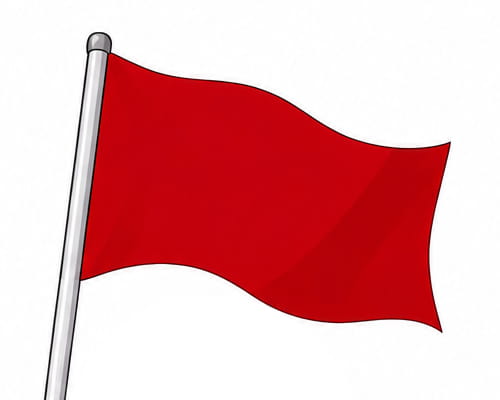
Teaching Red Flags
Now that you have a better idea of the specific practices that skilled instructors use, these red flags can alert you to unsupportive or unsafe teaching practices.
 |
Pressure |
There can be a fine line between encouraging students to take up a challenge, and pressuring them into moves they aren't comfortable with or aren't ready for. Responding to a student's uncertainty or discomfort by teasing, belittling, or pressuring is never OK.
|
|
Insensitive Corrections |
Students should expect to be corrected in class, particularly if their technique presents safety concerns. But corrections can always be done in a way that leaves a student's self-esteem intact. Corrections that feel dismissive or demeaning are completely unnecessary. A good instructor focuses on what's not right and how to correct it, rather than on a student's abilities or progress.
|
|
Ignoring Struggling Students |
Just because it's a group class doesn't mean each student will progress at the same pace or master a skill at the same time. A skilled instructor looks at individuals, not the group, when assessing how their instructions are landing.
If most of the group is getting it except one or two students, a good instructor will encourage the group to continue practicing, while offering a few moments of personalized instruction to the students who are struggling.
|
|
Rigid Teaching Methods or Expectations |
An instructor who expects all students to learn equally well and at the same pace, without adapting how they teach to meet individual needs or learning styles, will almost certainly alienate some students. Good instructors are flexible and adaptable, and don't expect all students to progress at the same rate or master skills at the same time.
|
|
Minimizing Safety Concerns |
If you express fear or anxiety about your safety, the instructor should acknowledge this and offer support, instead of minimizing your concern.
Minimizing sounds like: "You're worrying about nothing. I'll be spotting and there's a crash mat if you fall."
Acknowledging your concern and supporting/encouraging you to take an appropriate risk sounds like: "I know it feels scary the first time. It's my job to make sure you're safe and I won't let you down. Do you feel ready to give it a try?"
|
|
Attention is Not Directed Appropriately |
An instructor who devotes most of their individual time encouraging students who already feel comfortable with what's being taught to push themselves further, usually does so at the expense of the more nervous students who are most in need of extra attention.
No student should monopolize the instructor's time, but students who are struggling generally need more attention in that moment to help them overcome whatever is holding them back.
|
|
The Class is About Performance, Not the Students |
When an instructor is in class, it's their job to teach, not to perform. An instructor who seems more interested in showing the class their own skills instead of teaching fundamentals, is unlikely to be successful at helping students develop the skills they need to progress.
A Simple Gut Check After Your First Class
Now that you know what to look for in a good pole instructor, this checklist can help you quickly evaluate your experience as you reflect on the class. Ask yourself...

- Did I feel safe, both physically and emotionally?
- Did I feel supported?
- Were explanations given in a way that I could understand?
- Did the instructor explain things in a different way if I wasn't getting it at first?
- Did I receive enough individual attention when needed?
- Did I feel comfortable asking questions?
- Were modifications offered if I needed them?
- Did I feel empowered when being corrected?
- Did the instructor celebrate my progress in a way that felt comfortable?
- Were my boundaries respected if I didn't feel ready for a particular move?
- Did I feel appropriately challenged, ending the class with a sense of accomplishment?
- Did I leave the class wanting to come back?
Trust Your Feelings
You don't need any special insider knowledge to evaluate an instructor. You can make a confident decision about whether a pole instructor has good teaching skills by paying attention to how they communicate, how they adapt their teaching for different students, and how you feel in the learning environment.
The best pole instructors aren't simply the best pole dancers—they're skilled teachers whose focus is on helping different students learn safely and confidently. Listen to that feeling in your gut immediately after class ends — it will tell you whether or not an instructor did their job in the way you needed them to.
More Helpful Guides for New Pole Dancers
Now that you know what makes a good instructor, these guides can help you with other questions you might have as you start on your pole dancing journey.
- Wondering which style of pole dancing to pursue? Understand the most common pole class styles so you can choose your best fit, as well as a studio that offers what you're looking for.
- Looking for a studio in your area? Make the Worldwide Pole Studio Directory your next stop.
- Learn how to choose a pole dancing studio that fits your goals and learning style.
- Learn what to expect at your first pole dancing class, including what to wear, what to bring, pole class etiquette and more.
- If you've decided to learn to pole dance at a studio, this guide to pole classes and studios is filled with more information and resources to help you get off on the right foot.
- Not sure if studio classes are right for you? This guide to home vs studio pole dancing presents the pros and cons of each option and helps you choose your best learning path.
Frequently Asked Questions
Do pole instructors need certifications?
Do pole instructors need certifications?
Your Pole Pal doesn't know of a single country where a certification is a legal requirement of being a pole instructor. In other words, anyone can call themselves a pole instructor and teach classes. So in that sense, certification is not strictly necessary.
Certifications can be helpful however, because they affirm that an instructor has a certain minimum skill set and — in the opinion of the certifying body — possesses the appropriate knowledge to teach safe pole classes. But the teaching behaviors you see in class can often tell you more about the experience you'll actually have as a student.
Is it okay to switch instructors if a class doesn't feel right?
Is it okay to switch instructors if a class doesn't feel right?
Absolutely. A good instructor can still be a poor fit for your needs if their attempts to adapt to your learning style just aren't working for you. Switching doesn't mean you or the instructor failed. It can simply mean you aren't a good match for each other.
Many studios have a variety of instructors on staff, so if you don't feel that your assigned instructor is a good fit, you should speak to the owner about transferring to a different class.
What if I feel intimidated by an instructor who seems very advanced?
What if I feel intimidated by an instructor who seems very advanced?
Great instructors know how to teach beginners, regardless of their own level. If the instructor is actually doing a good job of teaching, it may be that your feelings of intimidation are coming from the fact that you're new to pole and don't yet have the technical skills the instructor does. In that case, you might want to give the instructor the benefit of the doubt and stick with them to see if you feel less intimidated after a few classes.
On the other hand, if you genuinely feel that the instructor seems more interested in showing off than teaching, the issue may lie with an instructor who lacks self-esteem or teaching skills or both. In that case, you could speak with the studio owner to let them know how you feel, and perhaps request a transfer to a different instructor's class.

Was this page helpful? Make YourPolePal.com your preferred source of pole dance info on Google, so it'll be easier to find more useful pole guides like this one.


Susan Peach was an early pioneer in pole fitness and is now the voice behind Your Pole Pal, a long-running resource for the pole community. With more than 30 years of experience teaching pole, dance, and fitness, she helps newcomers navigate the world of pole with confidence.

What's New?


-
How Old Do You Have to Be to Take Pole Dance Classes?
Sep 06, 26 04:12 PM
 Get clear on minimum age limits for pole dance classes, and why waivers, studio policies, and parental consent all matter.
 -
How Hard is Pole Dancing? A Beginner's Reality Check
Aug 30, 26 05:42 PM
 Pole dancing is hard, but beginners can start at any fitness level. See what to expect, why technique matters, and how progress gets easier with practice.
 -
Pole Dancing for Beginners - What to Expect and FAQs
Aug 23, 26 08:35 PM
 Learn what to expect as you begin your pole dancing adventure, including answers to the most common questions from new pole dancers.
 -
London Pole Studios & More | Pole Dancing in England
Aug 21, 26 06:12 PM
Discover top pole studios in London as well as pole dancing classes throughout England. Find local studios near you to start your pole dancing adventure today. -
Getting Started with Pole Dancing: A Beginner's Guide
Aug 02, 26 11:02 PM
 New to pole dancing? Learn about home vs studio options, pole parties, safety basics and more so you can plan your pole dancing journey right, from the start.
Your Pole Pal loves to have fun, but she also has to earn a living, right? That's why you'll see ads on this site. She may also earn commissions on some of the products you'll see here, but there's never any cost to you since the advertisers pay for these.
The income generated through these means helps ensure Your Pole Pal can devote the time to providing you with all the free information & resources you'll find on this website.
Want to learn more? Your Pole Pal invites to you read her full advertising disclosure. You know...in case you haven't read enough legalese lately. 😉